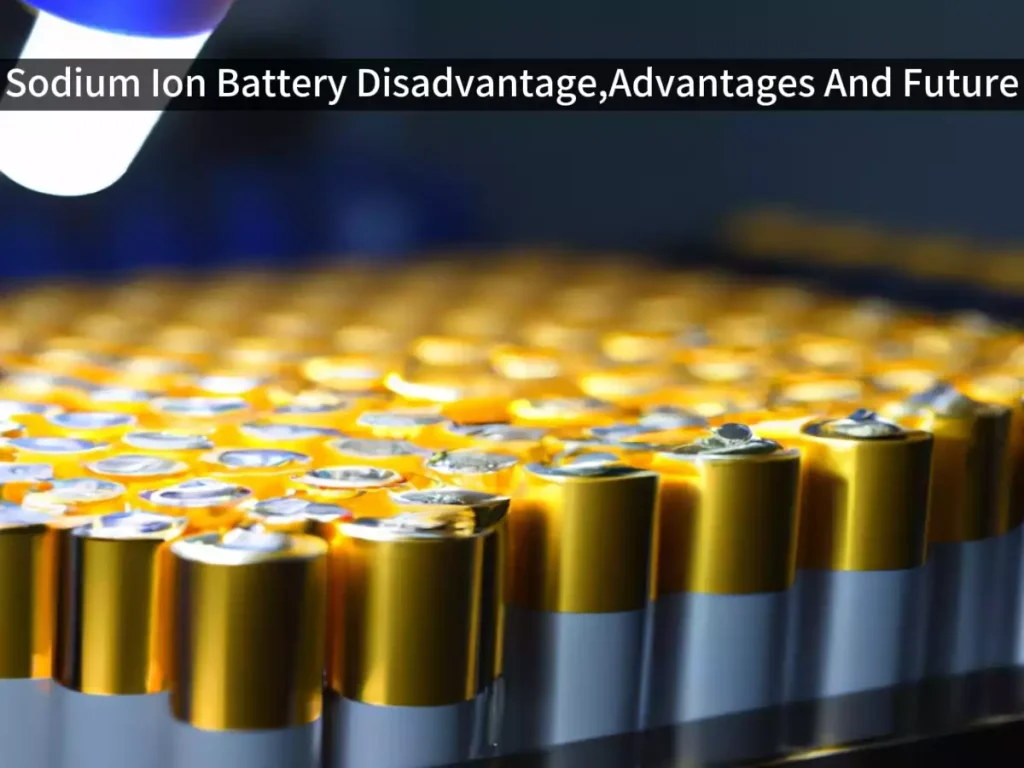
Sodium ion battery are particularly well suited for use in home solar energy systems. These batteries can store excess energy generated during the day for use at night or on cloudy days, thus improving the efficiency and reliability of home solar systems. In addition, sodium ion battery can also be used in off-grid systems to help reduce a home’s dependence on the traditional grid and mitigate peak demand for electricity. Currently, there are several practical application cases of sodium-ion home battery systems around the world, demonstrating their potential in real-world scenarios.
Home PV storage system:
Sodium ion battery are applied in PV storage systems to store the electricity generated during solar power generation and use it at night or on cloudy days.
Grid peak and valley
adjustment: Sodium ion battery can be used for peak and valley tariff adjustment to balance power demand by storing power in the valley and releasing it in the peak hours.
Emergency power:
Sodium ion battery can also be used in home emergency power systems to provide temporary power solutions for emergencies such as sudden power outages.
In fact, household energy storage and other use scenarios have become the industry generally recognized the direction of sodium battery applications. Analysis shows that sodium ion battery
have the following advantages in the field of household energy storage:
Cost Advantage Of Sodium Ion Battery After Mass Production
It is estimated that the cost of sodium-ion batteries after mass production is about 0.3-0.5 yuan / Wh, and the current cost is about 0.5-0.7 yuan / Wh, which is basically the same as the LFP battery.
In Terms Of Charging And Discharging, Sodium Ion Battery Have Better Low Temperature Performance
Capacity retention rate of 70% at -40°C. Dr. Wang Zuocheng, Far East Battery Core Product Service Department, said to GIG Energy Storage that based on the low temperature performance of sodium-ion batteries, it is more suitable for household energy storage installed in outdoor use scenarios. The current household energy storage mainly wall-mounted and stacked, if it is northern Europe, Russia and other regions, sodium battery household energy storage system can be used outdoors normally.

Sodium Ion Battery Discharge Multiplier Is Better Than LFp Battery
The solvation energy of sodium ion is lower than that of lithium ion, i.e., it has better interfacial ion diffusion ability; at the same time, the electrolyte of the same concentration has higher ion conductivity than lithium salt electrolyte, therefore, the multiplication performance of sodium ion battery is better, the power output and acceptance is stronger, and the disclosed sodium ion battery has 3C and above charging and discharging multiplication rate.
To C attribute of household storage capacity is less than 100kWh level, the capacity is smaller, the cycle life of the battery requirements are lower, the general requirement is about 6000 times, sodium ion in the early stage of industrialization has been close to this requirement.
Sodium ion has approached this requirement in the early stage of industrialization.
Currently, the cycle life of sodium ion battery can be 4000-5000 times, according to the charge and discharge once a day to calculate, sodium-ion batteries can meet the requirements of household energy storage. Household storage products are small, sodium-ion battery volume energy density is lower than the problem will not have too much impact on the cost and footprint.
Overall, with the accelerated industrialization of sodium ion battery, is expected to accelerate the penetration of household energy storage scenarios.

The future of sodium ion battery is promising, and researchers are working to increase their energy density and reduce their cost. As the technology matures, they will not only find applications in home energy storage, but may also expand into areas such as electric vehicles and portable electronic devices. The potential for mass production and widespread adoption could have a significant impact on the global energy storage market, providing a more sustainable and economical alternative. For the home battery market, sodium ion battery may play a key role in making renewable energy more accessible and reliable.