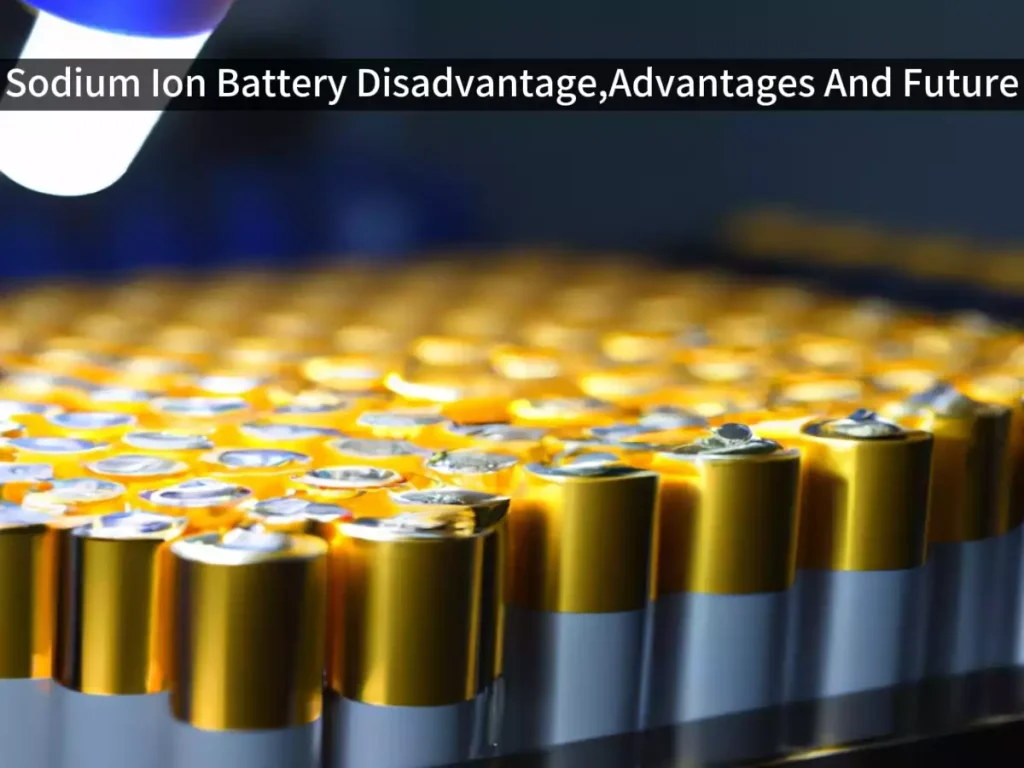
Sodium ion battery technology :A sodium ion battery consists of the following components: a negative electrode or anode that releases electrons and a positive electrode or cathode that receives electrons. When the battery is discharged, sodium ions move from the anode to the cathode through an electrolyte (a substance composed of free ions that acts as an electrical conductor), creating a potential difference that produces an electric current. When the battery is charged, sodium ion battery return to the anode until a predetermined charging termination voltage is reached.


- Abundant resources and low cost
Abundant resources: Sodium is the sixth most abundant element in the earth’s crust and is widely found in seawater and salt mines. Compared with lithium, sodium is more abundant and more widely distributed. This means that the acquisition of raw materials for sodium ion battery is not subject to geographical restrictions, and large-scale production can be realized.
Low cost: Due to the abundance of sodium, its mining and extraction costs are relatively low. In contrast, the mining and extraction costs of lithium are high, and the price is rising as the demand for lithium increases. Therefore, sodium ion battery have a clear advantage in the cost of raw materials. - higher safety
Good thermal stability: sodium ion battery have better thermal stability in high temperature environments. The electrolyte and electrode materials of sodium-ion batteries react relatively little at high temperatures, reducing the risk of thermal runaway.
No lithium dendrite problem: lithium ion battery are prone to form lithium dendrites during charging and discharging, leading to short circuits and safety hazards. The sodium ion battery does not have lithium dendrite problem, reducing the risk of internal short circuit and improving the safety of the battery.
Third, environmentally friendly and environmentally friendly. - Environmentally friendly
Strong environmental protection: the production and use of sodium ion battery have less impact on the environment. The mining and extraction process of sodium resources is more environmentally friendly, reducing the damage to the natural environment. In addition, most of the materials of sodium-ion batteries are non-toxic and recyclable, which meets the requirements of green and sustainable development.
Easy waste disposal: The recycling and disposal of sodium ion battery is relatively simple and causes less pollution to the environment. This feature makes it easier to recycle sodium ion battery at the end of their life cycle, reducing the impact of waste on the environment.
- excellent low-temperature performance
superior low-temperature performance: sodium ion battery in the low-temperature environment excellent performance.
Fourth, excellent low-temperature performance
Excellent low-temperature performance: sodium ion battery perform well in low-temperature environments. Studies have shown that sodium ion battery can still maintain high capacity and good cycling performance at -20 degrees Celsius. This gives sodium ion battery an advantage for applications in cold regions, such as winter power supply, energy storage systems in low-temperature environments. - Wide Voltage Range and Long Cycle Life Wide Voltage Range: sodium ion battery have a wide voltage range, which can adapt to the needs of different application scenarios. Its operating voltage range is usually between 2.0 and 4.0 volts, suitable for high energy density and high power output occasions. Long cycle life: sodium ion battery have a long cycle life and can withstand multiple charge/discharge cycles with little performance degradation. This feature makes sodium ion battery in the need for frequent charging and discharging applications, such as electric vehicles, grid energy storage systems.
- the application prospects for a wide range of grid energy storage: sodium ion battery are particularly suitable for grid energy storage systems due to their low cost and long cycle life. They can provide power support during peak demand periods, balance the grid load, and enhance grid stability and reliability. Renewable energy storage: sodium ion battery can be used in conjunction with renewable energy systems, such as solar and wind, to store excess power and provide power during peak energy demand or when there is no wind or sun, enhancing the utilization of renewable energy. Electric transportation: Although lithium ion battery currently dominate the field of electric vehicles, sodium ion battery have advantages in low cost and safety, and are expected to be widely used in short-distance transportation such as electric bicycles and electric motorcycles in the future.


The sodium ion battery market is forecast to grow at a rate of 27% per year over the next decade, with annual production expected to increase from 10 GWh in 2025 to approximately 70 GWh in 2033, an increase of nearly 600%. Since sodium ion battery and lithium battery are produced using essentially the same technology, sodium ion battery technology is likely to become more widespread, making it possible to convert production lines and make them more cost-effective. Although there are still some outstanding issues with sodium ion battery, the electrification sector’s interest in the batteries is growing to the point where major international players in battery manufacturing are turning their attention to the technology.