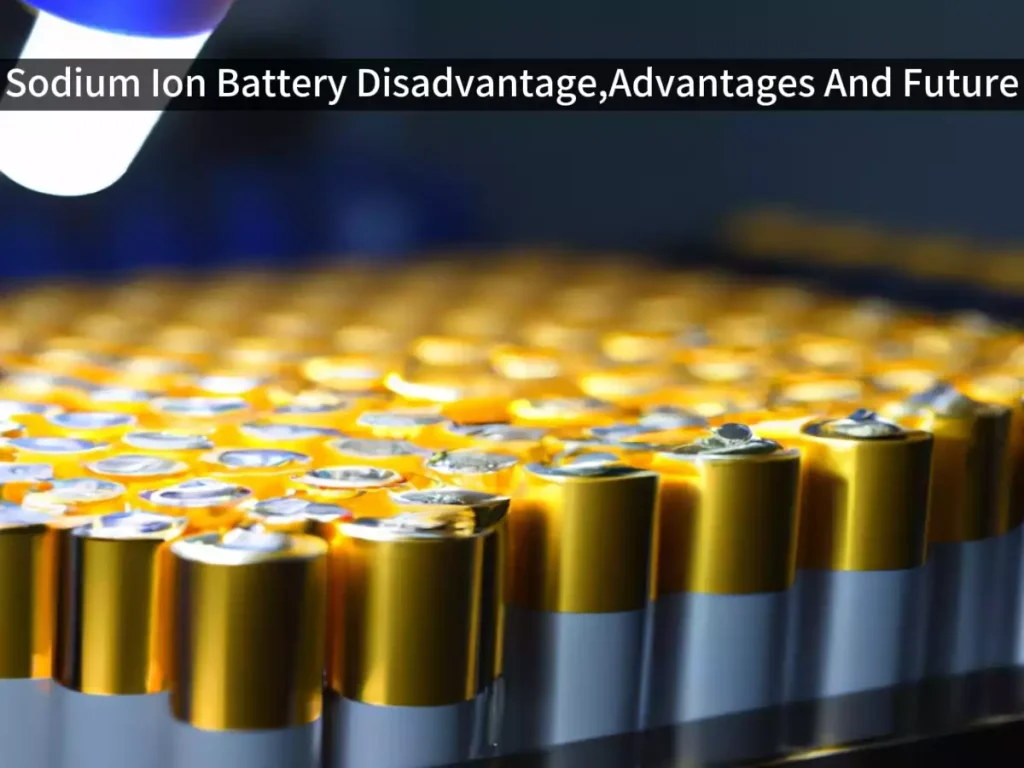
Sodium ion battery are secondary batteries that rely on the movement of sodium ions between the positive and negative electrodes, similar to lithium ion battery, both of which are known as “rocking chair” battery.

Electric vehicles and electric bicycles:
Sodium ion battery are well suited for electric vehicles and electric bicycles due to their high energy density and fast charging characteristics. It can provide longer range and faster charging time to meet people’s demand for efficient and convenient transportation. – Certain electric vehicles with sodium ion battery technology have a range of up to 600 kilometers and charge faster than lithium ion battery.
Home And Industrial Energy Storage Systems:
Sodium ion battery can be used in home energy storage systems to store renewable energy sources such as solar or wind power for use during times of peak power demand or poor weather. Their long life and high energy density characteristics are well suited for such applications. – In the industrial sector, sodium ion battery can also be used to store electrical energy in industrial facilities to balance the energy consumption of the plant and improve the efficiency of energy utilization.

Smart Grid And Renewable Energy Storage:
Sodium ion battery can be used as part of a smart grid energy storage system to store renewable energy sources, such as wind and solar energy, in order to supply power at times of peak demand, which helps to balance the load on the grid and improve grid stability.
With the rapid development of renewable energy, stable energy storage has become a key issue. Sodium ion battery are the preferred solution for renewable energy storage due to their high energy density and long life.
Portable Electronic Devices And Wearable Devices:
Although lithium ion battery dominate the portable electronic device market, sodium ion battery are gradually being used in portable electronic devices such as smartphones, tablets and laptops due to their higher energy density and long cycle life.
In the field of wearable devices, such as smartwatches, health monitors, and smart glasses, the high energy density and flexible characteristics of sodium ion battery make them a broad application prospect.

Sodium ion battery have not yet been mass-produced, and it is difficult to reduce the cost. From a technical point of view, the biggest difficulty faced by sodium battery at present is the selection of cathode materials, which leads to a very high test production cost due to the uncertainty of cathode materials. When the technology matures in the future, the cost advantage will
appear.
Based on its good use in energy storage scenarios, the future may be a good complement to the existing lithium battery products or even replace. However, given the use of grid measurement of security requirements are extremely high, the need for a large number of data verification, and therefore requires a long time to verify the process.