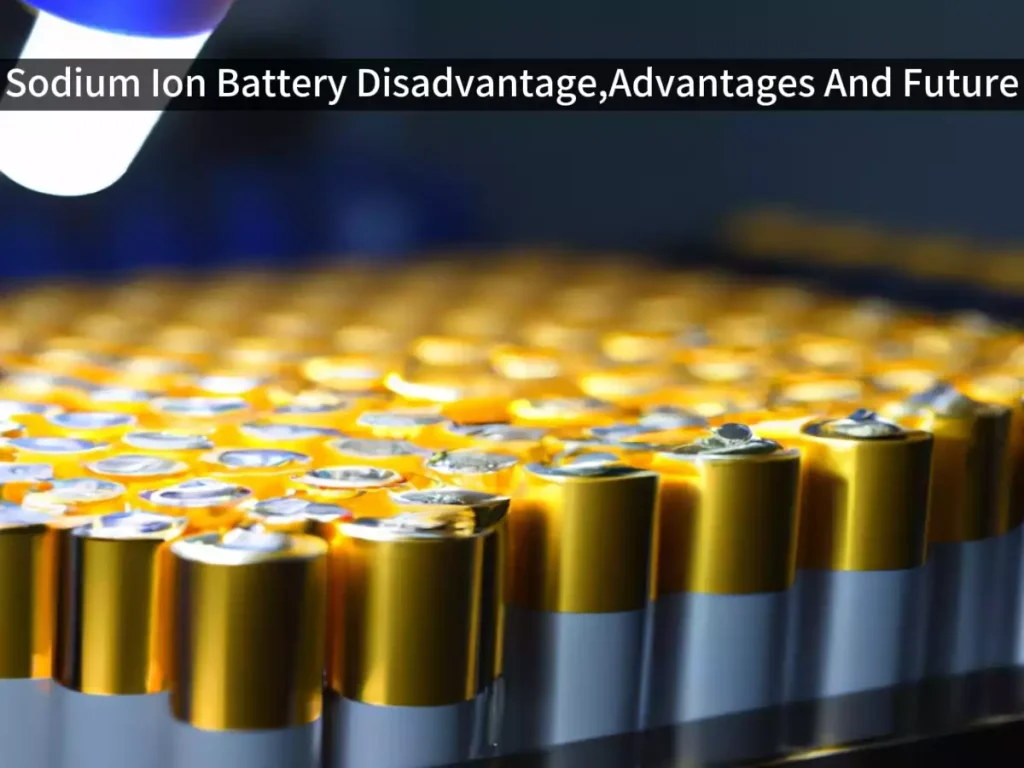
Sodium ions are sodium atoms that have lost one electron and are positively charged. The sodium ion plays an important role in nature and in life. Sodium ions also have a wide range of uses in the preparation of sodium-ion batteries, electrolytes in lithium-ion batteries, and other fields. Therefore, sodium ion battery safety is important.
Sodium ion battery cells consist of a cathode based on a sodium containing material, an anode (not necessarily a sodium-based material) and a liquid electrolyte containing dissociated sodium salts in polar protic or aprotic solvents. During charging, sodium ions are extracted from the cathode, and inserted into the anode while the electrons travel through the external circuit. During discharging, the reverse process occurs where the sodium ions are extracted from the anode. And re-inserted in the cathode with the electrons travelling through the external circuit doing useful work.

Compared with lithium ion battery, the study of the electrical characteristics of sodium ion battery is still relatively preliminary, but according to current research, sodium ions can also work at higher temperatures due to their higher kinetic activity of electrochemical reactions relative to lithium ions. Therefore, sodium ion battery have the advantages of higher energy density, lower cost, and better environmental adaptability, but in order to achieve a wider range of applications, sodium ion battery need further research and improved cycle life.

Safety performance testing of sodium ion battery is very important. When conducting safety performance tests, the physical, chemical and electrical characteristics of the battery need to be considered to evaluate its safety under normal operation and extreme conditions (e.g., high temperature, short-circuit, overcharge, over-discharge, etc.). The following are some common battery safety performance tests:
1. Temperature test: Measure the temperature change of sodium ion battery to evaluate the performance and stability of the batteries under high temperature.
2. Thermal runaway test: Evaluates the thermal runaway characteristics of a battery and analyzes the rate of temperature rise and limiting temperature by simulating the failure of a single cell in a group of batteries.
3. short circuit test: through the simulation of the battery internal short circuit to assess the ability of the battery in a short circuit situation, as well as the response of the battery after the short circuit.
4. Overcharging test: Evaluate the performance and safety of the battery under overcharging condition by overcharging the battery.
5. Heavy Impact Test: Simulated mechanical heavy impact tests are conducted on the battery to evaluate the safety of the battery under charging and discharging conditions.
These tests can evaluate the various safety performance of sodium ion battery, and the evaluation results can help manufacturers and users to understand the specific parameters of sodium-ion batteries, in order to better grasp the use of the program, reduce risk and improve safety.
As an emerging battery technology, sodium ion battery have made significant progress in safety and performance in recent years. The following is the future outlook of sodium ion battery safety technology:
1. Material improvement: Future sodium ion battery safety will be enhanced by the continuous optimization of electrode materials. New cathode materials, such as layered oxides and polyanion compounds, have higher thermal and chemical stability, which helps reduce the risk of thermal runaway.

2. Electrolyte innovation: The development of more stable and safer electrolytes is an important direction for sodium ion battery safety technology. For example, technologies based on ionic liquids or solid-state electrolytes may be able to replace traditional liquid electrolytes, thereby significantly improving battery safety.
3. Structural design: Future sodium ion battery will innovate in structural design, adopting designs such as multi-layer diaphragms or heat-sensitive materials to enhance the safety of battery under extreme conditions. In addition, battery casing and encapsulation technologies will also pay more attention to fire and explosion resistance.
4. Thermal management system: future sodium ion battery will be equipped with more advanced thermal management system, through real-time monitoring and intelligent regulation of the battery temperature, to prevent overheating, thus improving the safety of the battery.
5. Standards and regulations: As sodium ion battery technology matures, industry standards and safety regulations will become more stringent. This will push manufacturers to pay more attention to safety in the production process and drive sodium ion battery products on the market to meet higher safety standards.
Overall, the safety technology of sodium ion battery will develop in the future towards material improvement, electrolyte innovation, structural design optimization, thermal management system upgrades, and integration of fault detection and self-healing technologies, etc. These advances will significantly enhance the safety and reliability of sodium-ion batteries in various application scenarios.